A record week adds to the largest six-week demand gain since 2011, excluding the pandemic recovery
The U.S. hotel industry posted another outsized gain in the week of Oct. 18-24 as revenue per available room (RevPAR) increased 12.6% year over year. That marked the seventh week of double-digit RevPAR growth in 2026, already the most such weeks in a year since 2015, excluding the pandemic recovery period.
Hotel demand again played a significant role in the increase, rising 5.2% and adding roughly 1.4 million room nights from the comparable week last year. That demand growth was accompanied by a 7.4% increase in average daily rate (ADR).
An easier comparison contributed to those gains. During the comparable week in 2025, U.S. hotels sold approximately 800,000 fewer room nights than in 2024, as the federal government shutdown coincided with a difficult comparison against hurricane-related displacement demand the year before. Still, the latest performance went well beyond recovering last year’s losses. Room demand was 2.1% higher than in the corresponding week of 2024, when hurricane displacement had elevated demand, representing approximately 560,000 additional room nights. That made last week the highest-demand week 43 on record. Weekly demand has reached record levels in seven of the past eight weeks. Additionally, this year, the U.S. hotel industry has seen 14 weeks of record weekly demand; the most since 2019.
That record extended a demand trend that has increasingly defined hotel performance this fall. Since Labor Day, U.S. hotels have sold 7.5 million more room nights than during the comparable weeks last year. While calendar shifts and easier comparisons have influenced the magnitude of growth from week to week, demand has continued to build beyond those effects, providing broader support for RevPAR growth as autumn has progressed.
If the demand surge continues, full-year U.S. hotel demand will likely be the largest ever recorded surpassing the previous record set in 2019.
Upper-tier hotels add to the demand story
Performance was strong across hotel classes, with every class except economy (+8.8%) posting double-digit RevPAR growth. Luxury and upper-upscale hotels combined for a 13.4% RevPAR increase, an important indicator given that the government shutdown’s impact last year was disproportionately concentrated among lower-tier hotels. Strength at the upper end provides additional evidence that the week’s growth wasn’t solely a product of the easier 2025 comparison.
Group business was an important contributor to the upper-tier performance. Luxury and upper-upscale group demand increased 5.5%, with additional group room nights accounting for nearly half of the total demand increase across those two classes. That contribution adds to the broader fall demand story, with growth extending well beyond the segments that faced the easiest comparisons from 2025.
Growth extends across markets
The breadth of the week’s performance was also apparent across market types. Top 25 U.S. hotel markets and those outside the top 25 both posted double-digit RevPAR growth, increasing 13.5% and 11.7%, respectively. Overall, more than half of all U.S. hotel markets recorded double-digit RevPAR growth, including 14 of the Top 25.
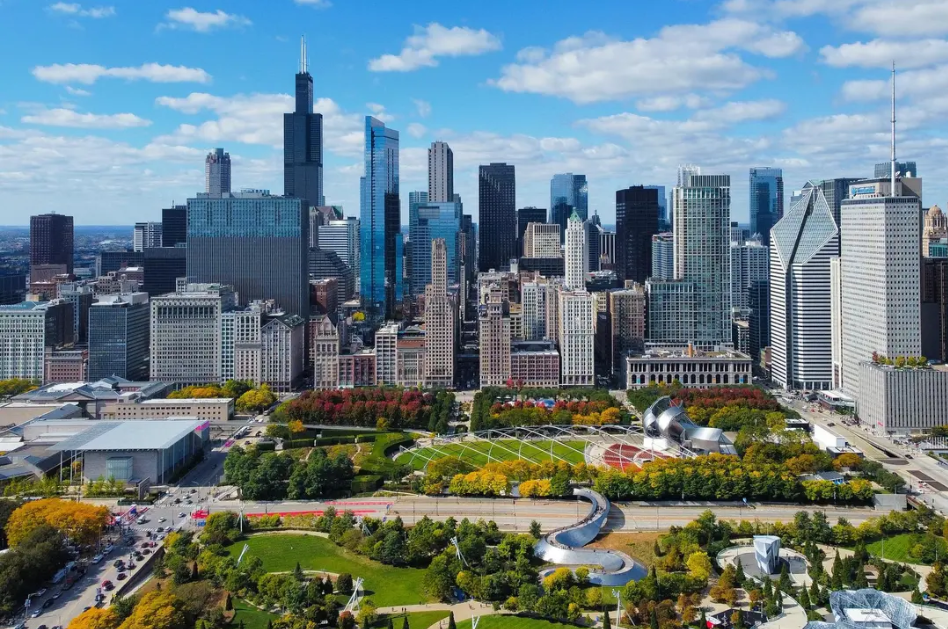
Chicago led the major markets with a 39.7% RevPAR increase, marking its 12th week of greater than 20% growth this year. The city’s event calendar provided additional demand during the week, including PACK EXPO International 2026 at McCormick Place, adding another event-driven boost to what has already been a strong year for the market.
Las Vegas, meanwhile, continues to see volatility on both ends of the spectrum. RevPAR increased 25.8% after declining by double digits the previous week, marking the seventh time this year that the market has recorded a double-digit RevPAR increase immediately following a double-digit decline. Convention scheduling continues to contribute to those week-to-week swings, with FABTECH 2026 providing a boost from Oct. 21-23.
New York City provided a different indication of demand strength. While its year-over-year growth wasn’t as pronounced as some of the week’s leading markets, hotel occupancy reached 93.6%, its highest weekly level since 2024. That performance reflected a combination of demand drivers, including overlapping conferences, events and leisure travel.
Fall demand continues to build
Easy comparisons remain part of the recent U.S. hotel industry growth story, particularly against the government-shutdown-affected period of 2025, but the latest results give several reasons to look beyond the base effect. U.S. hotel demand surpassed not only last year’s depressed level but also the hurricane-boosted comparison from 2024, setting a record for the 43rd week of the year. At the same time, higher-end hotels posted strong growth, group demand increased and gains were widespread across markets.
More broadly, U.S. hotels have sold 7.5 million additional room nights over the six weeks since Labor Day, the largest year-over-year increase over a six-week period since 2011, excluding the pandemic period. While calendar shifts, events and easier comparisons have influenced individual weeks, the magnitude and breadth of those gains show that stronger demand has become a more consistent feature of hotel performance this fall.
Global RevPAR climbs again
Global hotel RevPAR, excluding the U.S., improved 4.2% on a comparable and constant USD basis in the week ending Oct. 24. ADR continued to drive global RevPAR change as occupancy fell for a second consecutive week. By country, the largest RevPAR gains were seen in India, France, Spain, Japan and Canada where RevPAR grew by more than 10%. India again saw the largest RevPAR gains with this week’s results up 55.5%.
Of the 43 weeks this year, Canada’s hotels have seen RevPAR growth in 38 of them. Only 14 other countries, including Italy, South Korea, Spain, and Vietnam, have seen more weeks of growth this year.
Mexico and the Gulf Cooperation Council (GCC) countries continued to see declines. However, the declines in Mexico are more moderate than earlier in the year whereas the decreases have intensified in the GCC.
This week, upper-upscale class hotels saw the largest RevPAR growth (+5.6%) followed by luxury and upscale hotels where the measure increased by more than 4%.
By: Cole Martin, Isaac Collazo / CoStar News