
Favorable holiday calendar, broad-based demand growth drove performance gains nationwide
With easy comparisons to Yom Kippur a year ago, U.S. hotel demand accelerated during the week of Sept. 27 to Oct. 3.
Demand increased 5.9%, resulting in nearly 1.5 million additional hotel room nights sold. The gain contributed to a five-week stretch that has generated approximately 5.6 million additional room nights compared to the same period in 2025.
That demand translated into another standout week for overall hotel performance. Revenue per available room (RevPAR) increased 12.9% year over year, marking the third consecutive week of double-digit growth and the fourth such gain in the last five weeks. The demand growth translated into gains across all major performance metrics, lifting occupancy by 3.5 percentage points while supporting a 7% increase in average daily rate (ADR). While results remain preliminary, the combination of multiple double-digit growth weeks positions September to become the strongest month of RevPAR growth this year (+11.2%) and the largest increase since February 2023.
Weekday business demand was a primary catalyst
As has been the case in four of the past five weeks, weekdays remained the primary driver of U.S. hotel performance growth. RevPAR from Sunday to Thursday was up 16.7%, significantly outpacing the weekend growth of 6.1%. Demand during weekdays rose 8.1% year over year and accounted for 93% of all incremental room nights sold last week, continuing a pattern that has defined the industry’s recent performance gains.
The timing of the Jewish high holidays once again amplified the weekday trend. In 2025, the comparable week encompassed Yom Kippur, which can influence conference attendance, meeting schedules and business travel patterns. With the holiday occurring earlier in 2026, the industry benefited from a more favorable comparison.
The influence of that tailwind was especially apparent in the upper end of the hotel industry. Luxury and upper-upscale hotels combined for a 17.8% RevPAR increase, alongside a 10.1% increase in room demand and a 6.5-percentage-point gain in occupancy. All three metrics represented the strongest growth rates of 2026 for the combined segment.
Group travel played a significant role in that performance. Group demand for luxury and upper-upscale hotels increased 25.6%, generating approximately 464,000 additional room nights compared with the prior year. Notably, 20 of the top 25 U.S. hotel markets recorded double-digit gains in group demand, suggesting that meetings and convention activity remained strong across many of the country’s largest hotel markets.
Growth extended across the country
Another notable characteristic of the week was the breadth of gains. RevPAR increased in 86% of all U.S. markets, including 24 of the top 25 markets. Double-digit RevPAR growth was recorded in 87 different markets nationwide. Both major and smaller destinations saw sizable gains, with top 25 markets posting a 15.9% RevPAR increase and markets outside the top 25 increasing 10.5%.
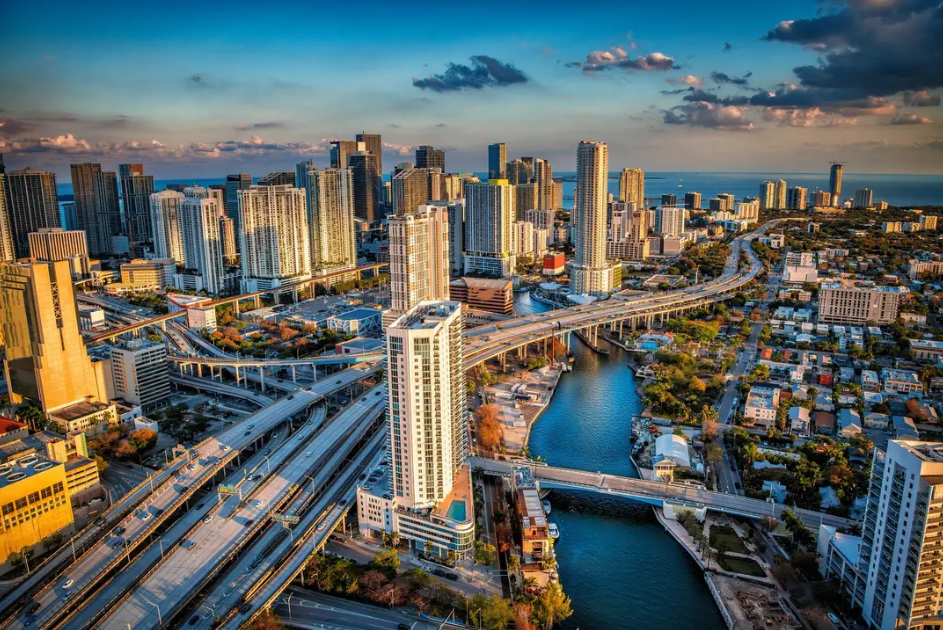
Florida served as a microcosm of the broader industry trends, with five different markets posting RevPAR gains greater than 30%. The state’s growth was not concentrated in a single demand segment. Major business markets such as Miami and Orlando benefited from strong weekday travel activity, while leisure-oriented markets including Naples and Daytona Beach also recorded outsized gains. Melbourne added another dimension to the story as hotel demand was boosted by compression surrounding a SpaceX launch.
The diversity of Florida’s performance underscores a broader national theme. Growth was not concentrated in a single traveler segment, destination type or event category. Instead, business travel, leisure demand and events all contributed to the week’s gains, helping drive performance increases across a wide range of U.S. markets.
Takeaway
A favorable holiday calendar helped create a stronger comparison for September, contributing to what is likely to be the strongest month of RevPAR growth in 2026. Yet the breadth of the industry’s gains suggests the recent performance surge was driven by more than a calendar shift alone. Weekday business demand remained the primary catalyst, but growth also benefited from leisure travel and event-driven compression, resulting in broad-based performance gains across markets and hotel segments.
Global RevPAR slows
Excluding the U.S., global hotel RevPAR on a comparable and constant USD basis rose 1.4%, its lowest increase of the past 11 weeks. China (-10%) was a significant drag on the results as the country finished the Mid-Autumn Festival holiday and entered its National Day (Golden Week) period. Excluding China, global RevPAR was up 4.1%. The Gulf Cooperation Council (GCC) also held back performance as RevPAR dropped 25.7%, its largest decline of the past 16 weeks. Excluding the GCC and China, global RevPAR was up a healthy 6.3%.
Mexico, which has seen RevPAR decrease in all but one week this year, recorded its smallest decline of the past 26 weeks (-3.8%). Traditional tourism markets continued to see sharp RevPAR declines that were offset somewhat by the remaining ones.
As in past weeks, the strongest growth was seen India, Italy, France and Canada where RevPAR saw double-digit gains. Except in India, most of the growth was driven by rising ADR. Australia and the U.K. also posted solid results with RevPAR rising by more than 5% during the week.
By: Cole Martin, Isaac Collazo / CoStar News